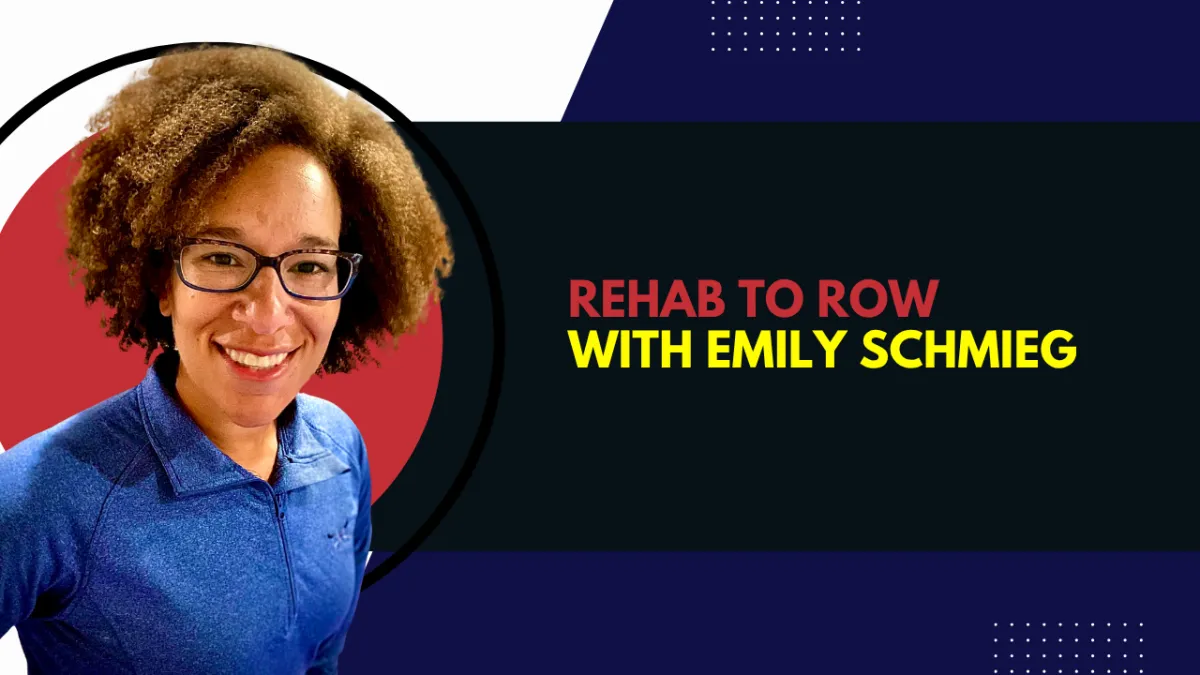
Rehab to Row with Emily Schmieg
For Emily Schmieg, rowing has been a 20-year journey filled with unexpected turns—from discovering the sport in college to competing internationally, overcoming cancer, and eventually returning to the water simply for the joy of rowing.
How Emily Schmieg Discovered Rowing
Emily grew up in Philadelphia with a background in soccer and running. She didn't discover rowing until college, when a rower at the University of Pittsburgh's club activities fair encouraged her to give it a try. After her first experience in a boat, she knew she had found something special.
What started as a casual introduction quickly became a competitive career. Emily joined a strong lightweight women's program and began developing as a rower.
From College Rowing to International Competition
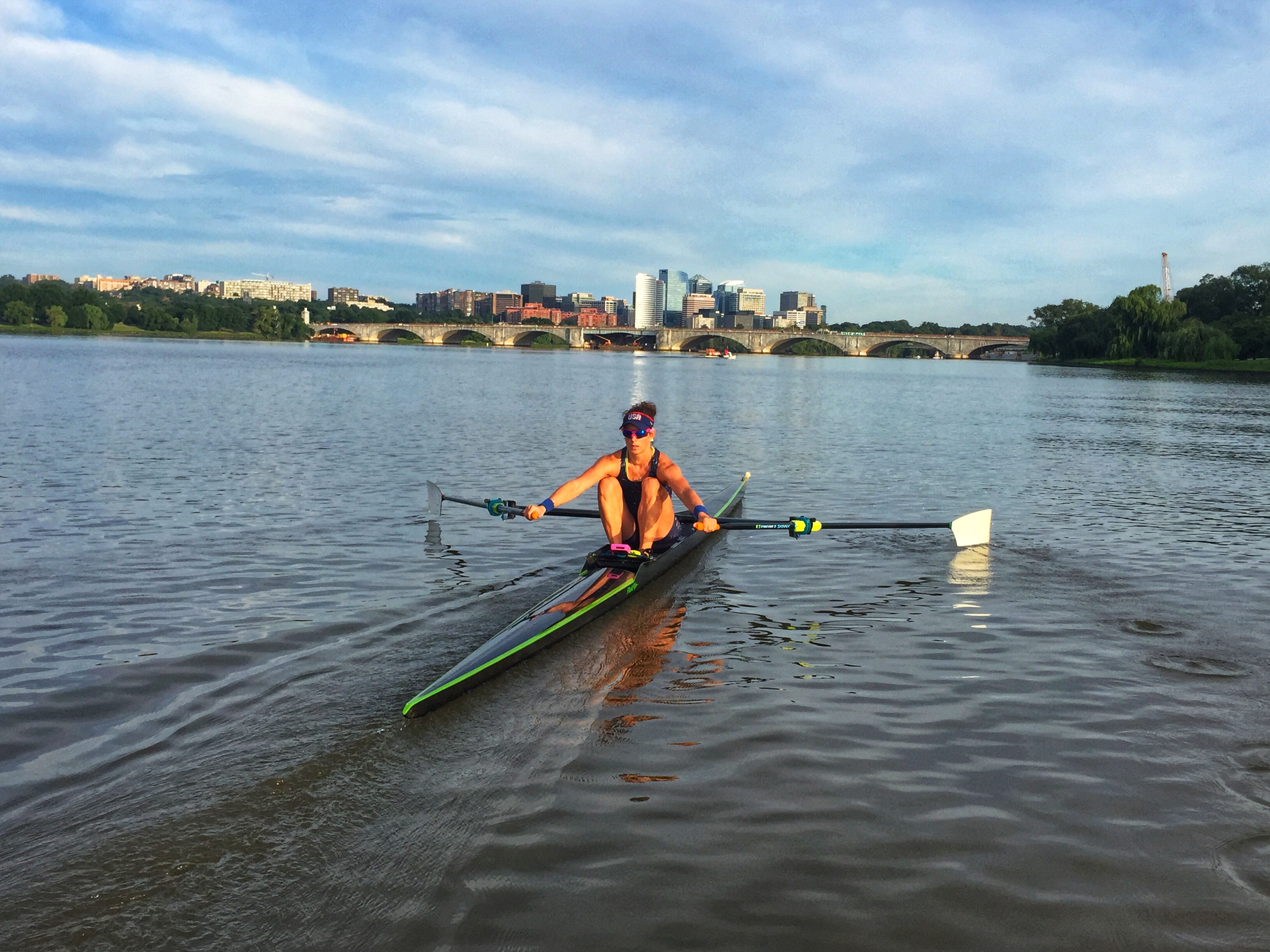
Emily's rowing career continued to progress from college competition into U23 and national-level rowing. Her path wasn't always straightforward, with coaching and program changes along the way, but she eventually found a home at Potomac Boat Club, where her performance began to take off.
Her international career included a bronze medal in 2017 and a silver medal in 2018. These experiences helped establish rowing as a major part of her life and identity.
Preparing for the Olympics During an Uncertain Time
In 2020, Emily was preparing for the Olympic Trials when the COVID-19 pandemic changed everything.
The competition was shut down just one day before racing was scheduled to begin.
What happened next would bring an even greater challenge.
Emily Schmieg’s Cancer Diagnosis and Return to Rowing
Later in 2020, Emily was diagnosed with thyroid cancer.
Despite her diagnosis and surgery, she returned to the water just days after her operation and eventually raced at the Olympic Trials roughly 100 days later. Throughout this period, she leaned heavily on the support of her rowing partner, Mary Jones, and her coaches.
Her recovery continued beyond that initial diagnosis. After another surgery and targeted radioactive iodine treatment, Emily began rebuilding physically and mentally.
Her experience demonstrates just how complicated an athlete's relationship with competition can become when health suddenly changes the path forward.
Finding a New Relationship With Rowing
Eventually, Emily stepped away from competitive rowing and moved to Alaska, giving herself time to reset before returning to the sport recreationally.
That transition changed the way she experienced rowing.
Instead of waking up before sunrise for structured training sessions and organizing her life around performance, Emily began rowing for enjoyment.
She could choose when to row, what kind of workout she wanted, and when it made sense to simply stay off the water.
After years of high-level competition, that freedom offered a completely different way to experience a sport she had spent so much of her life pursuing.
Balancing Rowing, Running, and Recovery
Running has also become an important part of Emily's life.
She set a goal of qualifying for the Boston Marathon, channeling some of the same competitive drive that had fueled her rowing career. After completing her first marathon in 3:47, she improved her time to approximately 3:33 at the Marine Corps Marathon, moving closer to the qualifying standard.
Rowing has also become a valuable complement to her running.
When running becomes difficult, rowing provides a lower-impact way to continue working on cardiovascular fitness while staying active.
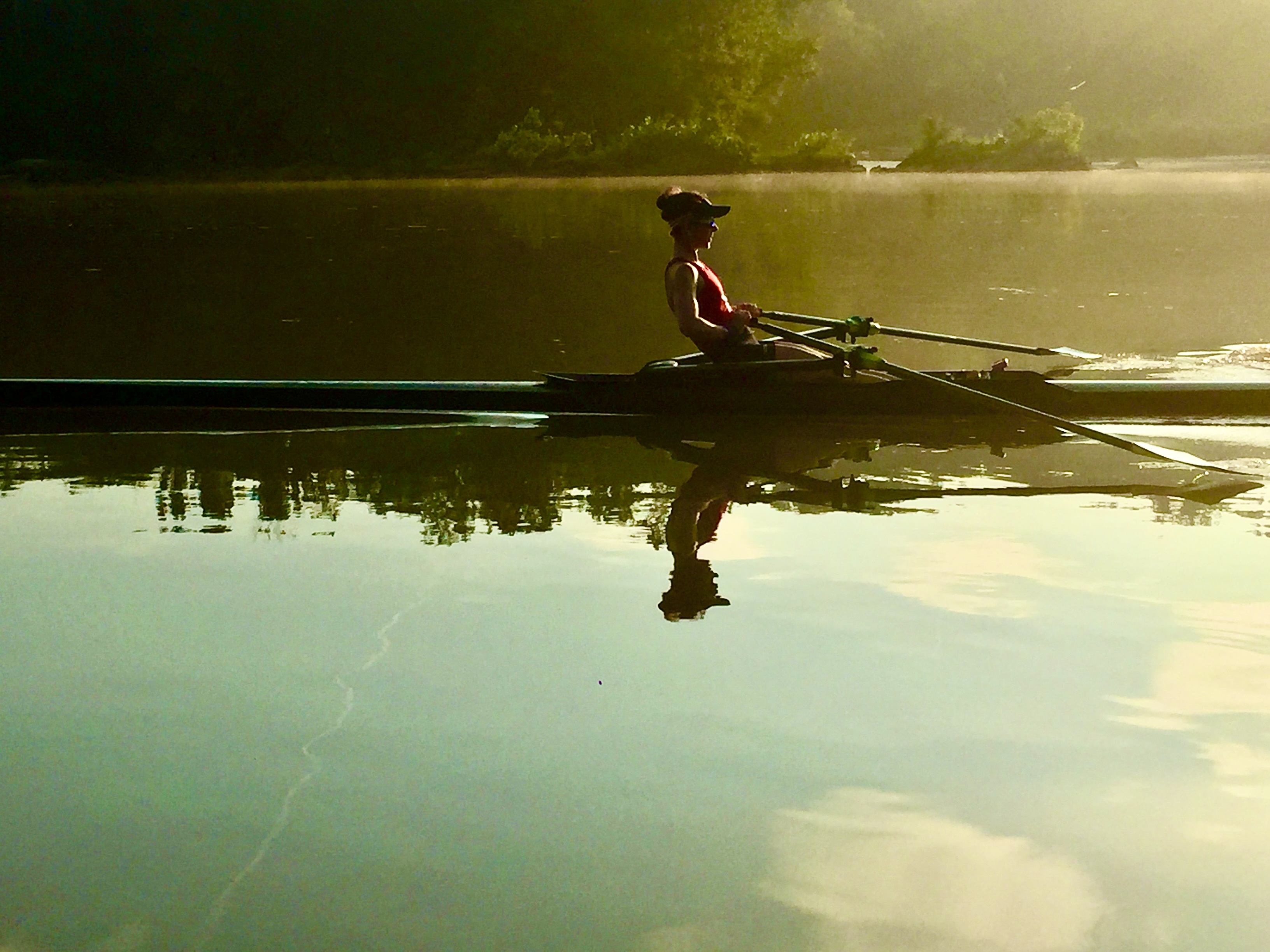
Today, Emily also coaches part-time, helping lead a masters rowing program.
Coaching gives her another way to stay connected to rowing while sharing the experience and knowledge she has gained throughout her career. It also allows her to contribute to the rowing community without having to structure her entire life around elite competition.
Her relationship with rowing has changed, but the sport remains an important part of her life.
What Rowing Means to Emily Today
Perhaps one of the biggest lessons from Emily's story is that an athlete's relationship with sport can evolve without losing its meaning.
She doesn't regret the years she devoted to elite rowing. She made a conscious decision to pursue that goal, and the experience gave her incredible opportunities, relationships, and memories.
At the same time, she has discovered the rewards of life beyond competition—including time with family, her husband, her dogs, and the freedom to enjoy everyday life.
For Emily, the most meaningful part of rowing isn't necessarily winning.
It's those moments when everything comes together—the technique, timing, power, rhythm, and connection between rowers—until the boat seems to move effortlessly.
Those moments of flow are what keep her coming back.
After two decades in the sport, Emily is still chasing that feeling—not necessarily the podium.
Sometimes, the greatest victory is simply finding your way back to the water.